Abu Dhabi is establishing a dedicated court to handle human trafficking cases — a significant step in strengthening legal protection for vulnerable people, including domestic workers. Here's what was announced, and why it matters for anyone hiring or working in the UAE's household sector.
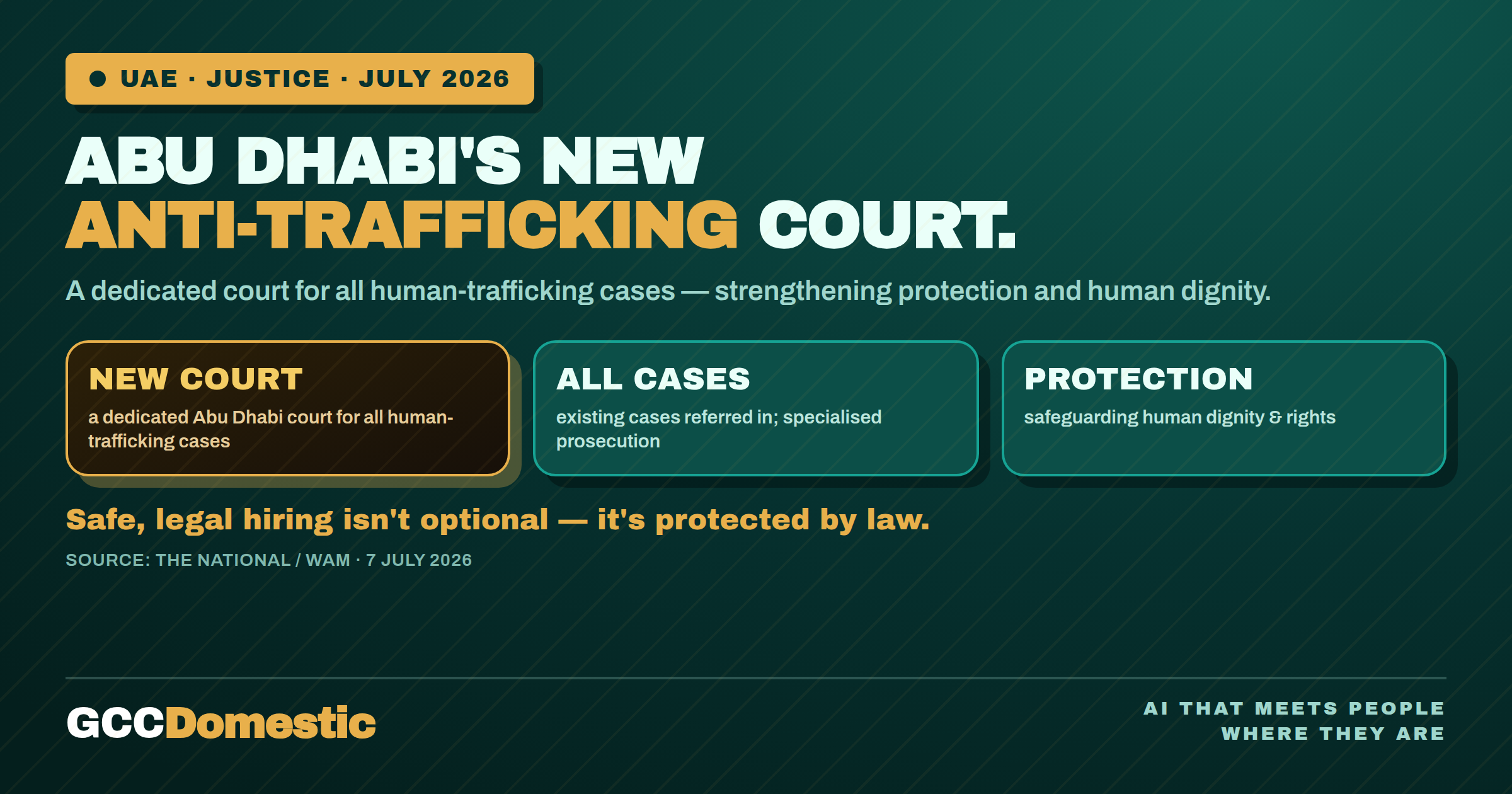
Quick answer: Sheikh Mansour bin Zayed, Vice President and Chairman of the Abu Dhabi Judicial Department, has issued a resolution creating a specialised court with jurisdiction over all human trafficking cases in the emirate of Abu Dhabi. It works alongside a dedicated public prosecution for investigating and prosecuting these crimes, and existing cases will be referred to it.
What was announced
According to state news agency WAM, Sheikh Mansour bin Zayed — Vice President, Deputy Prime Minister and Chairman of the Presidential Court — issued the resolution in his capacity as Chairman of the Abu Dhabi Judicial Department. The new court will have jurisdiction over all human trafficking cases arising within Abu Dhabi. The authorities described the move as part of ongoing efforts to strengthen a specialised judicial system, deliver justice in a timely way, and enhance the mechanisms that safeguard human dignity and rights.
How it will work
- All courts currently hearing human trafficking cases must refer them to the new court, unless pleadings have already closed.
- The court operates under a specialised public prosecution responsible for investigating and prosecuting human trafficking crimes.
- Its framework extends across the Courts of First Instance and Courts of Appeal with jurisdiction over such cases.
Why it matters for domestic workers and families
Human trafficking and labour exploitation almost always begin the same way: through unlicensed, informal recruitment that operates outside official oversight. A dedicated court and specialised prosecution raise the cost of those crimes and give victims a faster, more focused path to justice. For families, the message is clear — hiring through licensed, government-regulated channels isn't just safer, it's the single best way to stay far from any trafficking or exploitation risk. For workers, it means stronger legal backing if something goes wrong.
The UAE's wider anti-trafficking framework
The court adds to an existing structure that includes Federal Law No. 51 of 2006 on Combating Human Trafficking Crimes (as amended), the National Committee to Combat Human Trafficking, victim shelters, and the domestic-worker protections under Federal Decree-Law No. 9 of 2022 — written contracts, wage protection, rest days, and the worker's right to keep their own passport. The new Abu Dhabi court sharpens enforcement at the judicial end of that chain.
How GCC Domestic fits in
Every agency in our directory is verified live against the official labour regulator of its country — MOHRE in the UAE, Musaned in Saudi Arabia, and their equivalents across the GCC. That verification is exactly what keeps hiring inside the legal, protected system and away from the informal brokers that enable trafficking. Our AI assistant Nadia helps families hire the right way on WhatsApp, in 7 languages, 24/7. Browse verified agencies.
Frequently asked questions
What is the new Abu Dhabi human trafficking court?
A specialised court, established by resolution of the Chairman of the Abu Dhabi Judicial Department, with jurisdiction over all human trafficking cases in the emirate, supported by a dedicated public prosecution.
Does it affect existing cases?
Yes. Courts currently hearing human trafficking cases must refer them to the new court unless pleadings have already been closed.
How does this protect domestic workers?
It strengthens investigation and prosecution of trafficking and exploitation, which most often stem from illegal, unlicensed recruitment — reinforcing the importance of hiring only through government-verified channels.
How can families avoid trafficking risks when hiring?
Always hire through a licensed, regulator-verified agency, use an official written contract, pay wages through the approved wage-protection system, and never let anyone retain a worker's passport.
Related guides
How to hire a maid in Dubai (legally) · Verified UAE agencies · How to file a Tadbeer complaint
Sources: The National / WAM (Emirates News Agency), 7 July 2026; UAE anti-trafficking and domestic-worker legislation. This article is informational and not legal advice.