From January 1, 2026, paying your housemaid, driver or nanny in cash is no longer the legal way in Saudi Arabia. Domestic-worker salaries must now be transferred electronically through official channels linked to Musaned. Here’s exactly what changed, how to set it up in minutes, and the mistakes that can cost you in a dispute.
Short answer: Every household employer in Saudi Arabia must pay domestic workers’ salaries through the official electronic channels (participating banks and licensed digital wallets) connected to the Musaned platform. The rule was phased in during 2025 for households with multiple workers and applies to everyone from January 1, 2026 — regardless of how many workers you employ. Cash payments no longer count as proof of payment.
What exactly changed
| Before | From January 2026 |
|---|---|
| Cash salary, sometimes a signed receipt | Electronic transfer via Musaned-linked bank account or licensed wallet |
| No central record of payments | Every payment tracked on the worker’s record |
| Wage disputes = your word vs hers | Payment history is the evidence, automatically |
| Applied only to larger households (phase-in) | Applies to ALL domestic workers, even one worker |
The goal, per the Ministry of Human Resources and Social Development (HRSD), is protecting wage rights and making the employer–worker relationship transparent — for both sides. If a worker ever claims she wasn’t paid, your transfer history settles it in seconds.
How to pay your maid the legal way (5 minutes)
Use your account on musaned.com.sa (the same platform your recruitment contract lives on). Your worker's record and contract salary are already there.
Pick one of the participating banks or licensed digital wallets shown in the platform's salary-payment service. Many employers simply use the worker's payroll card or wallet account.
If the worker doesn't have an account yet, the channel you choose will issue one (payroll card / wallet) against her Iqama. The office that recruited her can help with this step.
Transfer the contract salary each month through that channel. The payment is logged automatically against her record — that log IS your receipt.
If you agreed on a raise, update the contract figure — paying a different amount than the contract creates exactly the mismatch this system is designed to catch.
New in 2026: the “Work Interruption” service
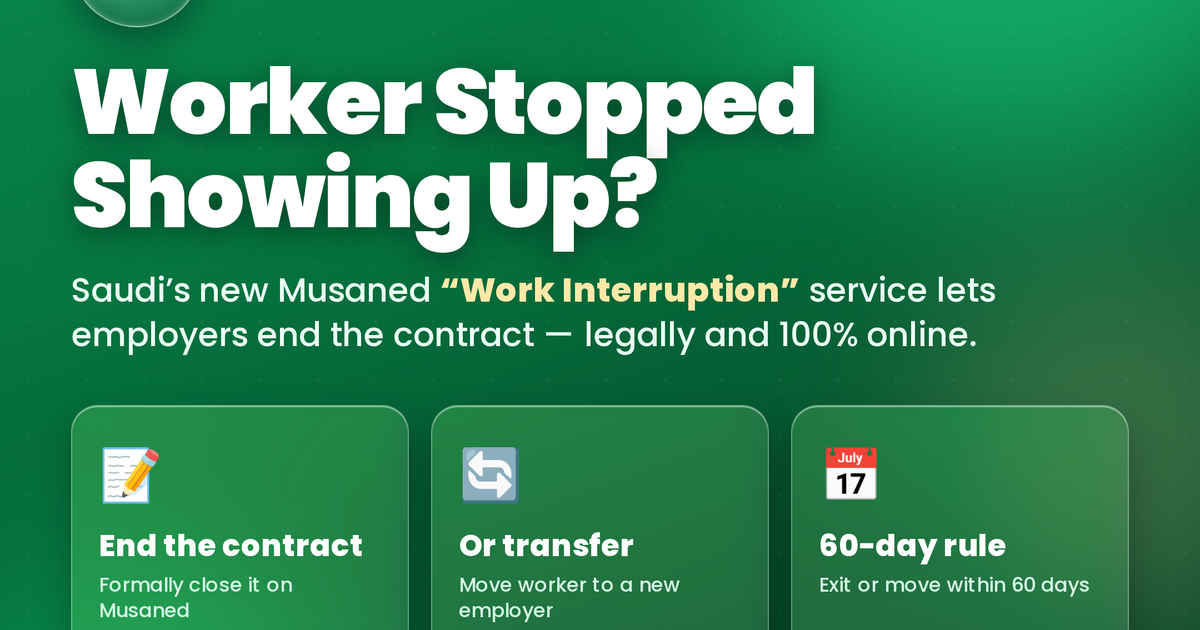
Alongside the e-salary rule, Musaned launched a Work Interruption service (February 2026). If your worker stops reporting to work, you can now file the interruption officially and choose between terminating the contract or transferring the worker to a new employer — a cleaner, documented alternative to the old informal absconding complaints.
⚠️ What happens if you keep paying cash? You lose your proof of payment. In any wage dispute, end-of-service calculation or exit process, the electronic record is what counts — an employer with no transfer history is presumed not to have paid. Non-compliance can also block your Musaned services when you next need them (renewals, new visas, transfers).
Hiring in Saudi Arabia? Start with a verified office
On GCC Domestic you can compare Musaned-licensed recruitment offices across Saudi Arabia — so your contract, salary setup and worker’s rights are handled correctly from day one, e-salary included.
Frequently asked questions
Do I have to pay my maid through Musaned from 2026?
Yes. From January 1, 2026 the electronic salary rule covers all domestic workers in Saudi Arabia, regardless of how many workers a household employs. Payments go through the official channels (participating banks and licensed digital wallets) linked to Musaned.
Can I still pay my maid in cash in Saudi Arabia?
You can hand over pocket money as a gift, but cash no longer counts as salary payment. Without the electronic record you have no recognized proof of payment in a dispute, and repeated non-compliance can affect your Musaned services.
What does the e-salary rule cost the employer?
The channels are the standard banking/wallet services — for most employers the cost is zero or a small wallet fee. Setting it up takes minutes inside Musaned's salary-payment service.
What if my worker doesn't have a bank account?
The payment channel issues her a payroll card or wallet account against her Iqama during setup. Your recruitment office can assist — it's a one-time step.
What is the Musaned Work Interruption service?
A service launched in February 2026 that lets you officially report a worker who has stopped reporting to work, then choose between contract termination or transferring the worker to a new employer — with the case documented on the platform.